We enclose the fusion materials in a capsule
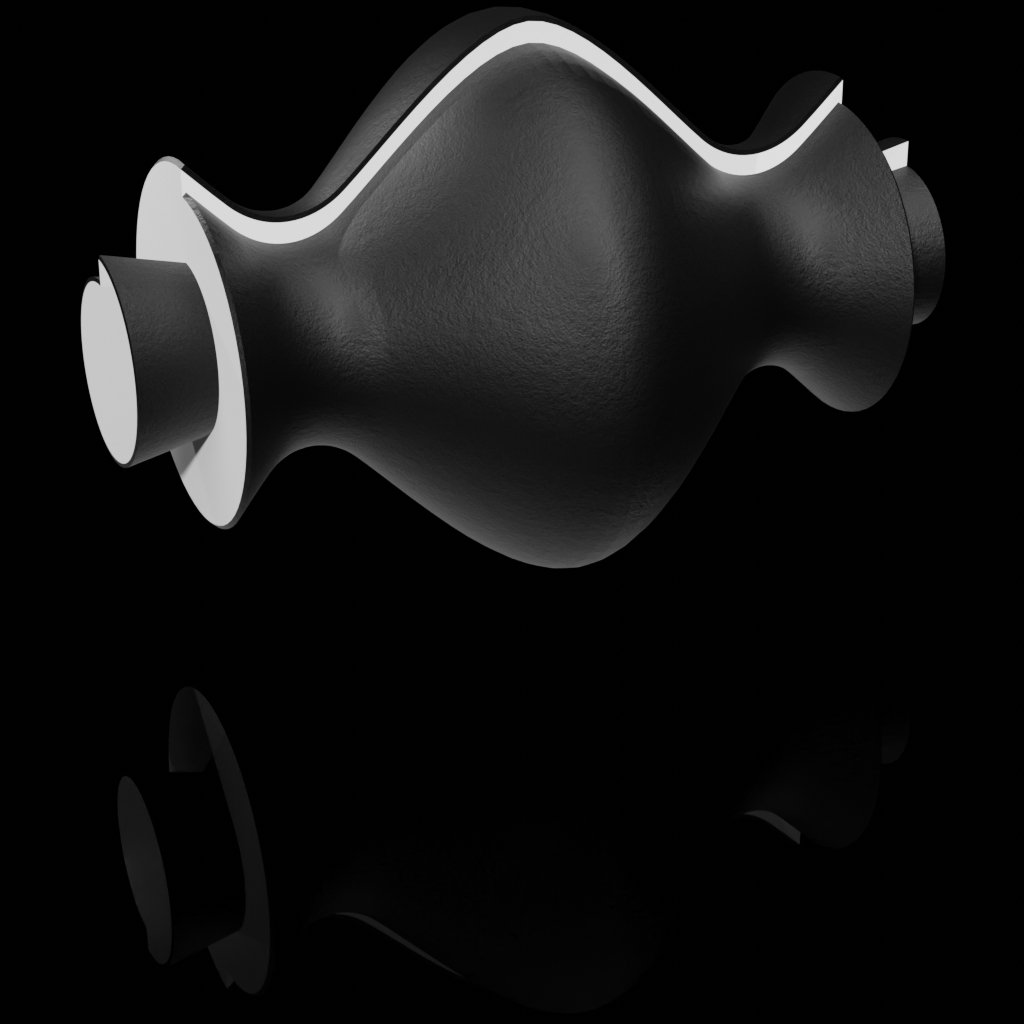
D-D Capsule
Deuterium-Deuterium Capsule
Quantity
Potential Fusion Energy
Cost of production
1 mg
347,7 MJ
$5/g
Avalanche Fusion
In D-D fusion, the reactions produce about 24.6 MeV of energy in the form of charged particles. These particles travel only a few micrometers in the compressed plasma, so they release their energy right where they are created. This is why D-D fusion is especially suitable for avalanche fusion: once a small region ignites, the reaction can spread on its own through the rest of the plasma. This makes possible the use of small, kilojoule-class lasers and the production of containerized micro-power plants.
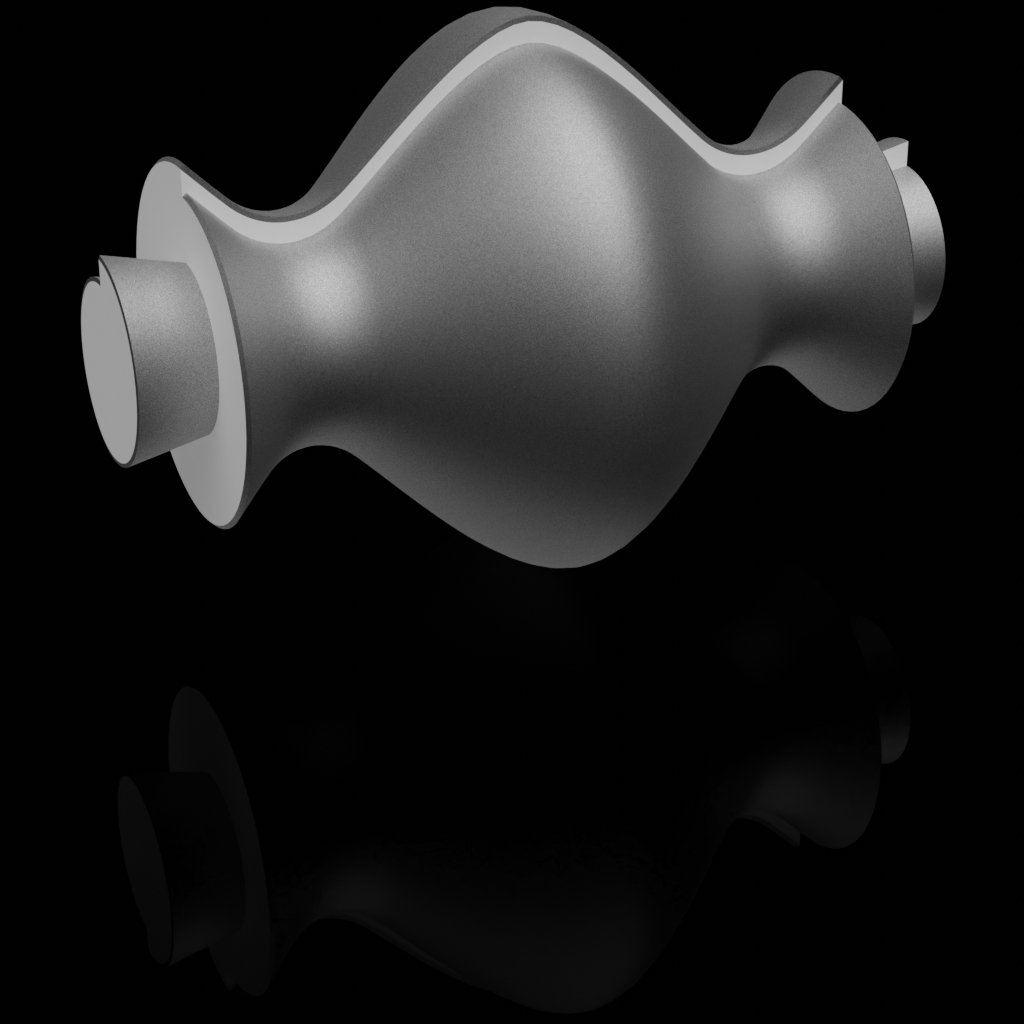
D-T Capsule
Deuterium-Tritium Capsule
Quantity
Potential Fusion Energy
Cost of production
Market Price
1 mg
350 MJ
$5/g
$30 000/g
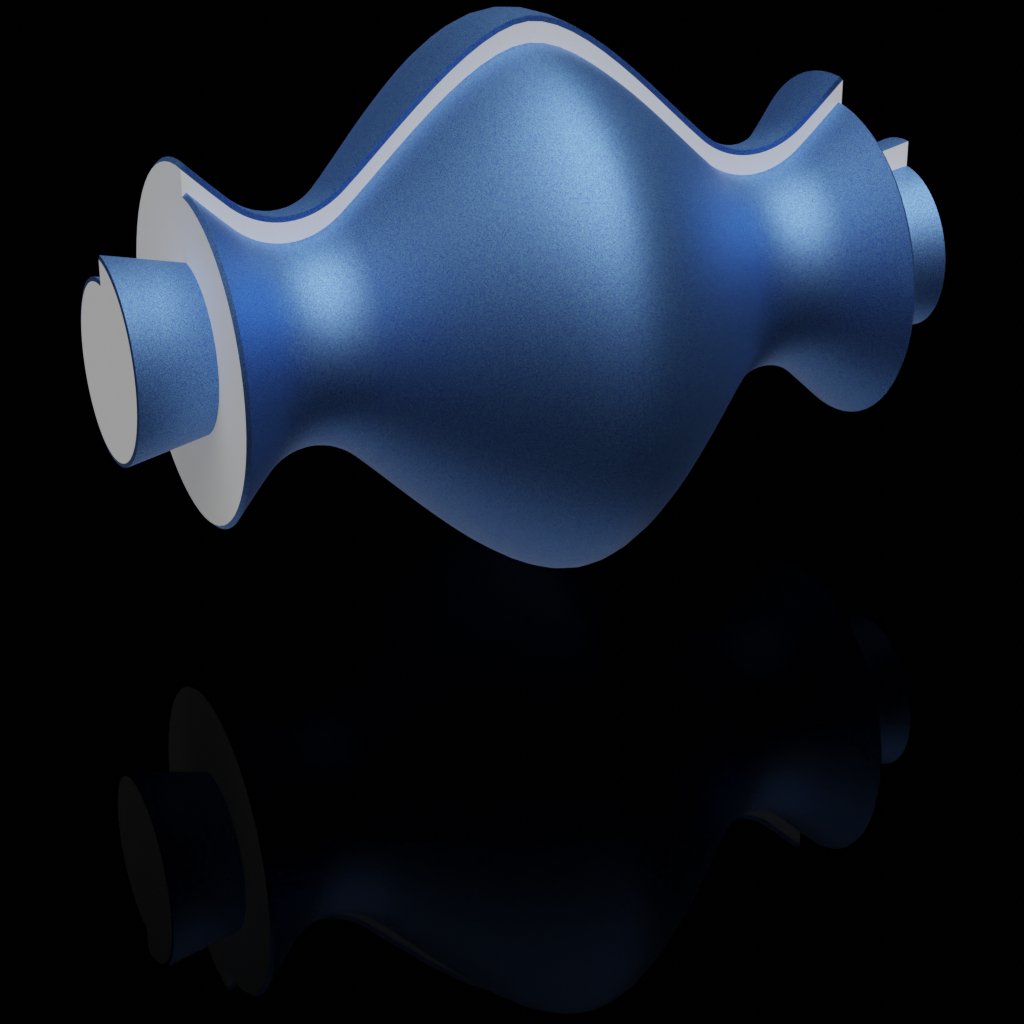
D-He3 Capsule
Deuterium-Helium3 Capsule
Quantity
Potential Fusion Energy
Cost of production
Market Price
1 mg
390 MJ
$5/g
$30 000/g
Commercially available Deuterium is processed in Capsule Reactors
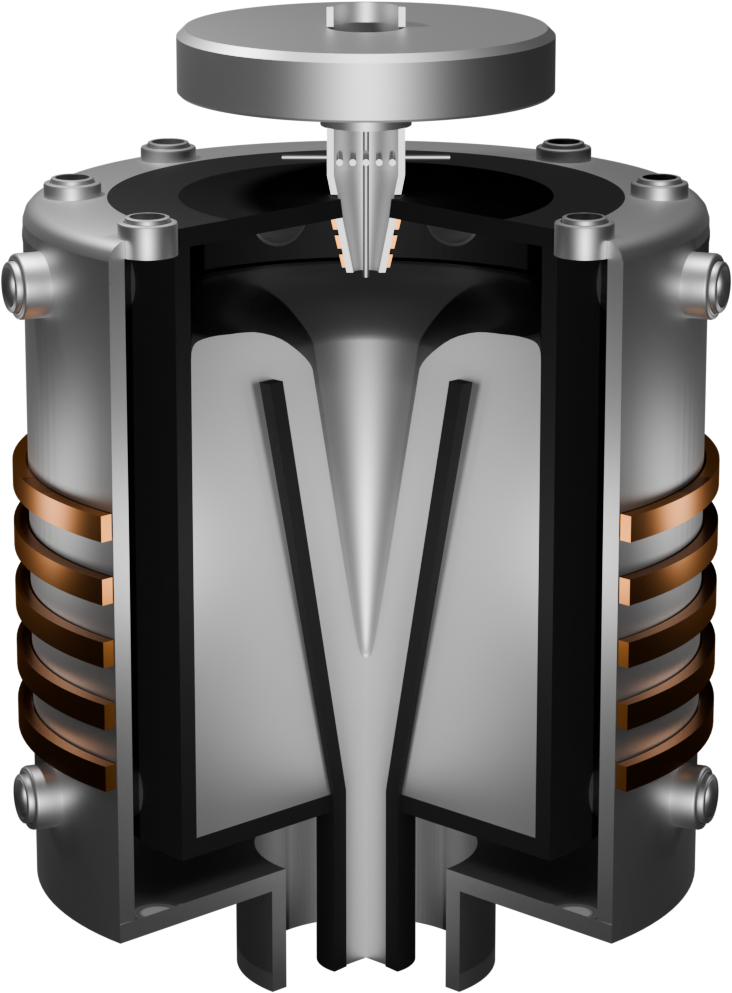
Capsule Reactor
Our Capsule Reactors utilize commercially available deuterium in a unique and efficient process. Tiny capsules, typically measuring just 3mm in diameter, are carefully filled with a mere 1 mg of deuterium. This concentrated deuterium is then subjected to immense pressure using whispering gallery mode laser radiation, compressing it to the extreme conditions required for fusion - temperatures exceeding 670 million degrees Celsius, and particle densities reaching a staggering 10^24 particles per cubic centimeter. To ignite this fusion reaction, a precisely timed pulse of proton radiation is delivered to the capsule, triggering the fusion event. The energy of the particles released during fusion is transferred via liquid lead through a heat exchanger to a Brayton-cycle energy converter, where it is transformed into electricity.
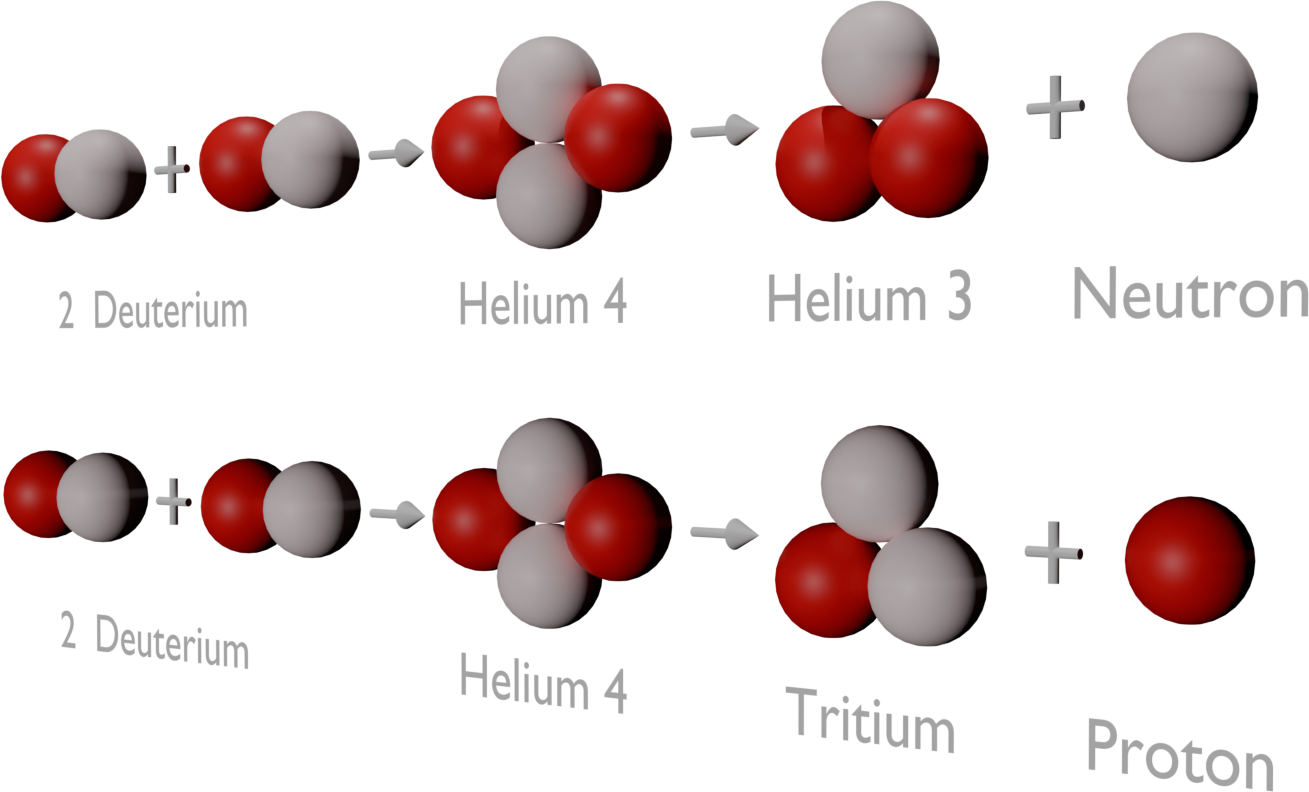
Primary Reaction
The Capsule Reactors convert 1 mg of deuterium into 0.5 mg of helium-3 and 0.5 mg of tritium fusion fuel, producing enough energy to operate the reactors themselves and the lasers needed for the fusion process. This self-sufficiency eliminates the need for external energy sources.
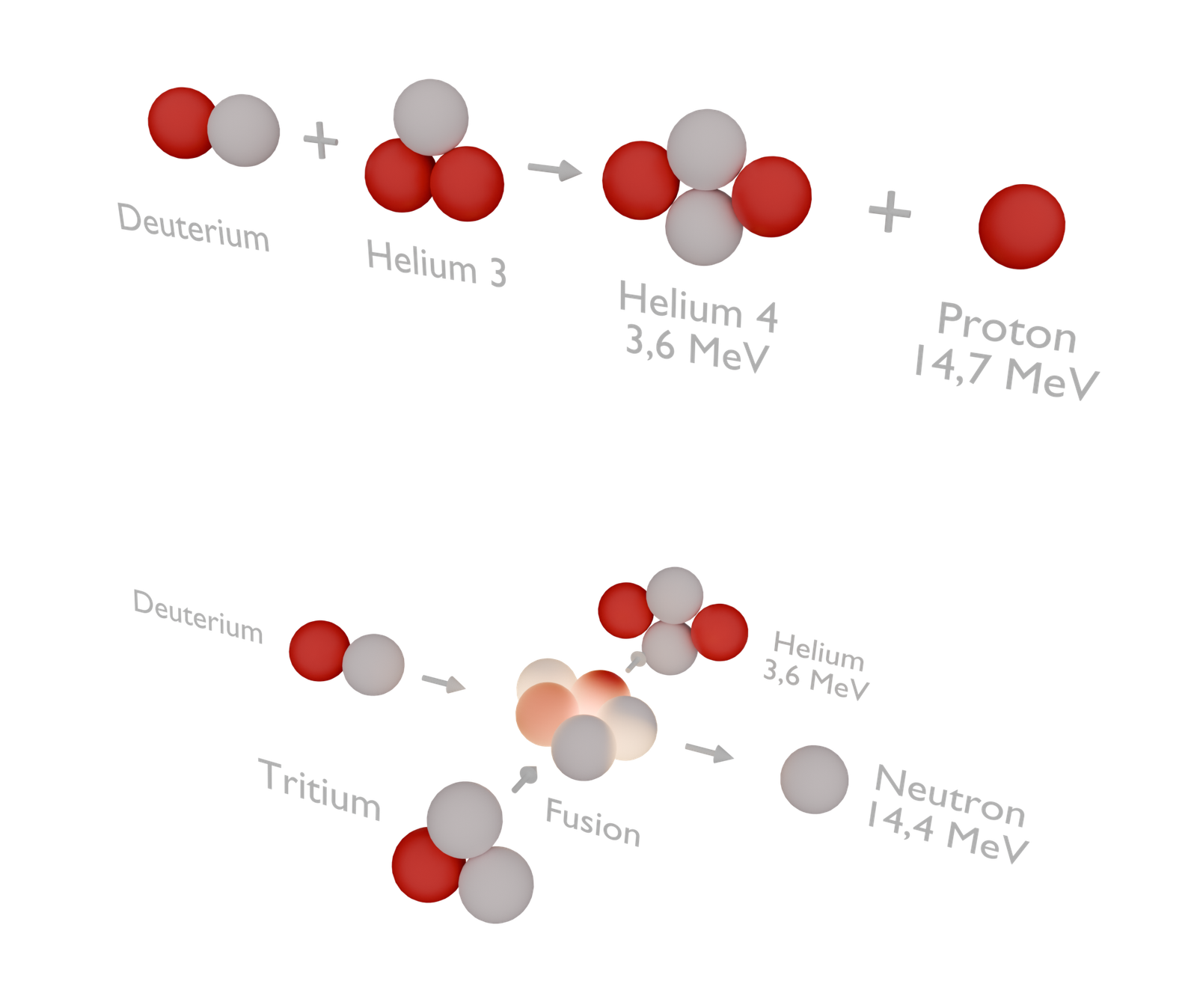
Secondary Reaction
If both the primary and secondary reactions occur, the potential energy content of 1 mg of deuterium fusion fuel is 347,7 MJ.
Avalanche Fusion
Avalanche fusion is a burn regime where fusion becomes self-amplifying: the charged particles from initial D-D reactions deposit their energy locally in a strongly magnetized, compressed plasma, triggering additional reactions in a cascading, avalanche-like manner. Because D-D fusion products stop within micrometers, their heating remains confined, allowing a small ignited hot spot to drive a propagating burn front and involve much of the fuel. This self-multiplying mechanism enables high-gain D-D fusion with kilojoule-class lasers, making compact, containerized micro-power plants feasible.